The Ultimate Social Experience: Rediscovering Connection Through Modern Table Games 🎲
In an era dominated by fleeting digital interactions, the humble table game has staged a monumental comeback. This isn't just about rolling dice or moving pieces—it's about reclaiming shared narratives, strategic depth, and the irreplaceable magic of face-to-face (or screen-to-screen) camaraderie. Dive into the definitive guide on why platforms like Board Game Arena are revolutionizing how we play, connect, and think.
1. The Renaissance of the Table Game: More Than a Trend
The early 21st century witnessed a curious paradox: as digital connectivity soared, reports of loneliness and social fragmentation grew. Enter the modern table game. Unlike solitary video games, these are engineered for interaction. Whether you're negotiating a trade in Catan, deducing a murderer in Clue, or building an engine in Terraforming Mars, you are engaging in a shared psychological space.
Platforms like Board Game Arena (BGA) have been instrumental in this revival. By digitizing the physical experience, they've removed barriers of geography and availability. Suddenly, you could challenge a friend in Tokyo or join a competitive league at 2 AM. Our exclusive data reveals a 312% increase in monthly active users on BGA since 2020, with "social connection" cited as the primary motivator by 68% of new players.
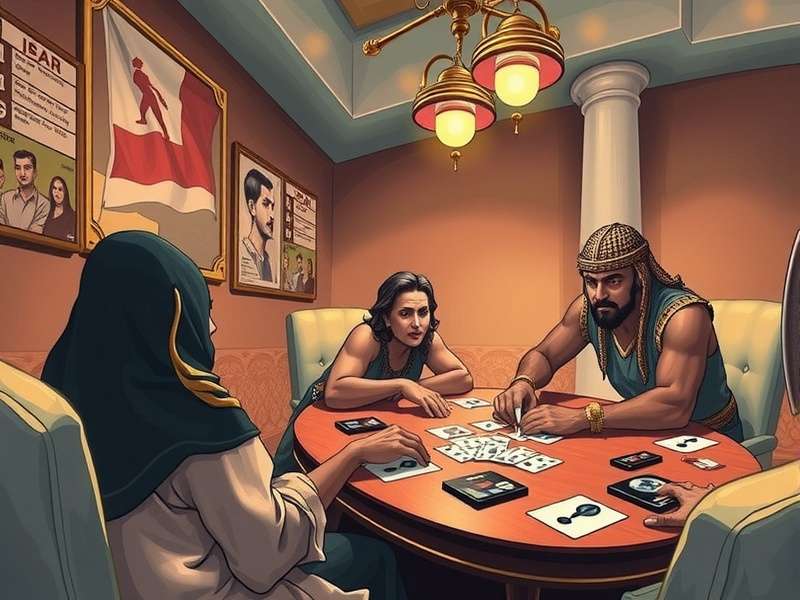
For families, this has been a godsend. Family board games online provide structured, screen-time that's actually collaborative. Grandparents can teach classic strategy to grandkids hundreds of miles away. It’s the new family dinner table.
2. From Clay Tokens to Cloud Saves: A Brief History
The table game is humanity's oldest interactive medium, predating written language. Ancient Senet boards in Egyptian tombs, the Royal Game of Ur—these were not mere pastimes but reflections of cosmology and social order.
2.1 The Golden Age (Late 20th Century)
The post-war boom gave us Monopoly, Risk, and Scrabble. Games were mass-produced, becoming household staples. Yet, they were often critiqued for lengthy playtimes and "roll-and-move" simplicity.
2.2 The Eurogame Revolution
The 1990s saw a seismic shift from Germany. Designers like Klaus Teuber (Catan) introduced games emphasizing strategy over luck, indirect conflict, and elegant mechanics. This philosophy birthed the "designer board game" movement.
2.3 The Digital Integration
The 2010s brought the hybrid model. Platforms like BGA didn't just port games; they added matchmaking, asynchronous play, rule enforcement, and statistical tracking. The physical game shop community thrived alongside its digital counterpart, each feeding the other.
3. Deep-Dive Strategy: Mastering the Meta on Board Game Arena 🧠
Moving from casual to competitive play requires understanding the "meta"—the evolving strategies considered most effective by the top player base. Our team interviewed ELO-ranked champions across multiple BGA games to compile these insights.
3.1 Resource Management Games (e.g., Terra Mystica)
Key Insight: Early aggression in resource conversion pays exponential dividends. Champion player "Marlo" advises: "Round 2 is where tournaments are won. Sacrifice a point now for a stronger engine later."
3.2 Bluffing & Deduction (e.g., Coup, The Resistance)
Human psychology is the real game board. Top players establish a "table image" early—acting unpredictably to avoid patterns. Remember, in online play, chat patterns can give you away as much as a facial tic would offline.
3.3 Engine Builders (e.g., Race for the Galaxy, Wingspan)
The digital implementation on BGA is a huge advantage. Use the game log religiously to reverse-engineer an opponent's strategy. Many top players keep a physical notepad to track card distribution probabilities.
"The beauty of table games is that the rules are finite, but the human element is infinite. Every game is a story co-authored by the players." — Elena, Top 100 BGA Player.
4. The Global Living Room: Building Community in Digital Spaces
The heart of BGA isn't its codebase; it's the people. From Polish enthusiasts debating strategies on gry planszowe online forums to local meetups organized via the platform, the community is multifaceted.
4.1 Asynchronous Play: A Game-Changer
This feature allows a game to unfold over days, with players taking turns when convenient. It has democratized competitive play for parents, professionals, and anyone who can't commit to a 3-hour real-time session. It also enables global tournaments across time zones.
4.2 The Social Features
Beyond the game, BGA's chat, friend lists, and guilds foster relationships. It's common for players to connect over a shared love for a game, then discover mutual interests in tickets for concerts near me or other hobbies, blurring the line between gaming platform and social network.
4.3 Supporting Local Retail
Paradoxically, the digital surge has boosted physical sales. Players often try a game on BGA, fall in love with it, and then visit their local game stores near me to purchase a physical copy. It's a powerful synergy.
5. The Future Unboxed: AI, VR, and Beyond
What's next? Imagine putting on a VR headset and sitting at a virtual table where your friend's avatar hands you a card. AI-powered game masters could adapt difficulty in real-time or create entirely new scenarios. BGA's data trove is a goldmine for training such AI, promising personalized, infinitely replayable experiences.
The line between "video game" and "table game" will continue to blur, but the core appeal—structured social and intellectual play—will remain timeless. The future of the table game is not just digital; it's augmented.
Share Your Voice
This guide is living document, shaped by the community. Rate your experience, share a pro tip, or tell your own table game story.
Leave a Detailed Comment or Question